In-Kind Donation

In-Kind Donations

Recycle, Reuse, Resale!

We would appreciate your donation of the following items for our use or resale.

Please read the instructions below and contact us first for discussing the details. We might not be able to accept certain items at some times.

Goods & Currencies

books

We collect Japanese and foreign language books for our used book market events.

We do not accept magazines, catalogs, or items that are damaged.
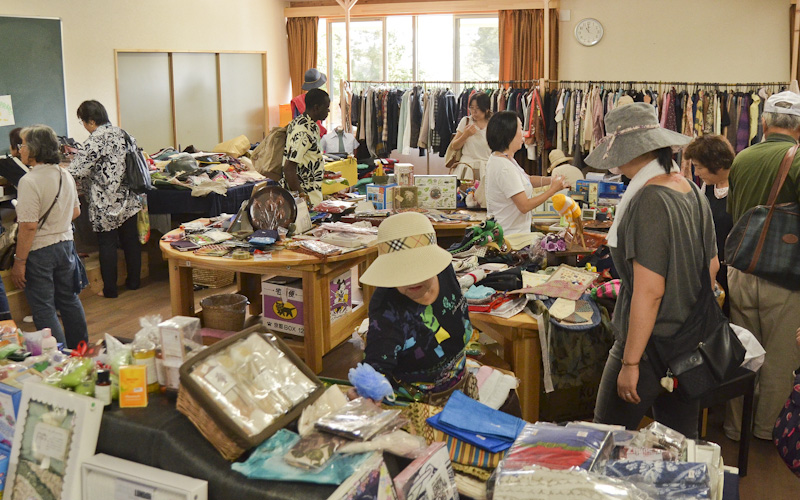
items for bazaar

The Asian Rural Institute’s Supporters Association collects item donations for the bazaars they put on at the Harvest Thanksgiving Celebration and at ARI flea markets. The proceeds go towards scholarships for our Rural Leaders Training Program. 

  • unused bags, towels, daily necessities, stationery, handicrafts, toys, household goods, tools, kitchenware
  • furniture, home decor
  • electronics, audio-visual goods
  • canned goods, carbonated beverages
  • potted plants, gardening items

We do not accept clothes, shoes, or plastic dishes at this moment.

gift cards & coupons

We accept valid gift certificates usable anywhere in Japan, beer coupons, department store coupons, travel vouchers, restaurant gift certificates, book coupons, book cards, rice coupons, etc.


telephone cards

We only accept unused Japanese telephone cards.

stamps

We collect used stamps for reselling. Please cut out and mount the stamps with a 1cm margin. Separate between Japanese and foreign stamps, and used and unused stamps. There is no need to count them.

foreign currency and old coins

Any currency from any country, be it coins or paper money, is acceptable. We can also accept old Japanese coins.

Frequent Flyer Miles

You can help out ARI and our overseas training participants by donating frequent flyer miles!  

Please contact American Friends of Asian Rural Institute (AFARI) for details.  

American Friends of Asian Rural Institute, Inc.
2028 E Ben White Blvd #240-9000
Austin, TX 78741

[email protected]

Subject: "Frequent flyer miles donation"

Koinonia Dinning Hall

This is where the community gathers to share meals and fellowship together. More than just a dining hall, it also serves as a venue for events, meetings, and learning activities. Koinonia is a Greek word meaning “fellowship” or “sharing.”

Kitchen

At peak times, meals are prepared for as many as 100 people at once. Students, staff, and volunteers all take part in cooking and meal preparation. The kitchen is not only a place for preparing food but also a space for learning, serving others, and building relationships within the community.

Classroom and Library

Participants attend classes in these classrooms throughout the training program. The library contains a wide range of English and Japanese books, audiovisual materials, and magazines covering agriculture, social issues, community development, and many other fields of study.

Men's Dormitory & Guest House

Participants and volunteers live in separate dormitories for men and women. The dormitory includes shared lounges, kitchens, showers, and laundry facilities. Wi-Fi is not available.

Poultry House

The poultry facilities include free-range chicken coops and a brooding house. More than 400 chickens are raised, producing over 80,000 eggs and approximately one ton of chicken meat each year.

Pig Pen

Participants learn a variety of pig farming techniques through hands-on practice. Both deep-litter and concrete-floor systems are used, and manure is recycled into biogas and fertilizer.

Goat House

Goat milk (over 200 liters annually) and meat are used for food, while manure is used as fertilizer. During the day, the goats roam freely in the pasture.

Forest

The forests surrounding the campus are managed through selective thinning for firewood and charcoal production. Leaves and other organic materials are collected for use in agriculture.

Fields

On 2.5 hectares of farmland, approximately 100 varieties of vegetables and crops are grown without chemical fertilizers or pesticides. The entire community helps manage the fields as part of its commitment to learning and self-sufficiency.

Rice Paddies

Rice is cultivated in paddies both on and off campus. Various organic rice-growing methods are studied and practiced, including weed control and fertilization using ducks.

Workshop

The workshop is a space for repair and recycling activities. It contains machinery, welding equipment, woodworking tools, and a variety of materials.

Feed Mixing Room

Livestock feed is produced here using both manual and mechanical methods. Continuous efforts are made to improve feed quality and sustainability.

Administration Building

The first floor houses the reception area and administrative offices, while the second floor contains staff offices and the Director’s office. The Farm Shop (Agricultural Training Room) is located adjacent to the building.

ARI Shop

The shop offers ARI-grown produce, processed foods, books, and handicrafts from the home countries of ARI graduates.

Farm Shop (Agricultural Training Room)

The facility serves as the hub of agricultural activities at ARI. It includes classrooms, storage for tools and farming materials, and facilities for drying and storing crops.

Oikos Chapel

Originally a 100-year-old traditional farmhouse, the chapel has been renovated into a place of worship. Daily morning gatherings are held here, along with meditation, dialogue sessions, gospel choir practice, and other community activities. Oikos is a Greek word meaning “home.”

Manna House (Food Processing Room)

This facility is used for producing and storing processed foods such as cookies and jam. The ground floor also contains a poultry processing facility.

Fish Ponds

Fish are raised for both food and agricultural purposes.

クリスマス・ウィンターキャンペーン 2025
Christmas and Winter Donation Campaign